AUGUST 10, 2026
Classroom speaking practice usually reaches the same few students. Here is how to give every learner a turn to explain, and hear what they actually understand.

Jovi Maniago
Head of Marketing at Better-ed
You ask if anyone has questions. Nobody raises a hand. You read the quiet as a sign the lesson landed, and you move on.
Sometimes that reading is right. Often it covers hesitation, or a student still assembling the sentence in their head, or a student who followed the steps without knowing why they work.
Classroom speaking practice is supposed to close that gap. In most sections it reaches only a handful of students, for reasons that have very little to do with how well anyone is teaching.
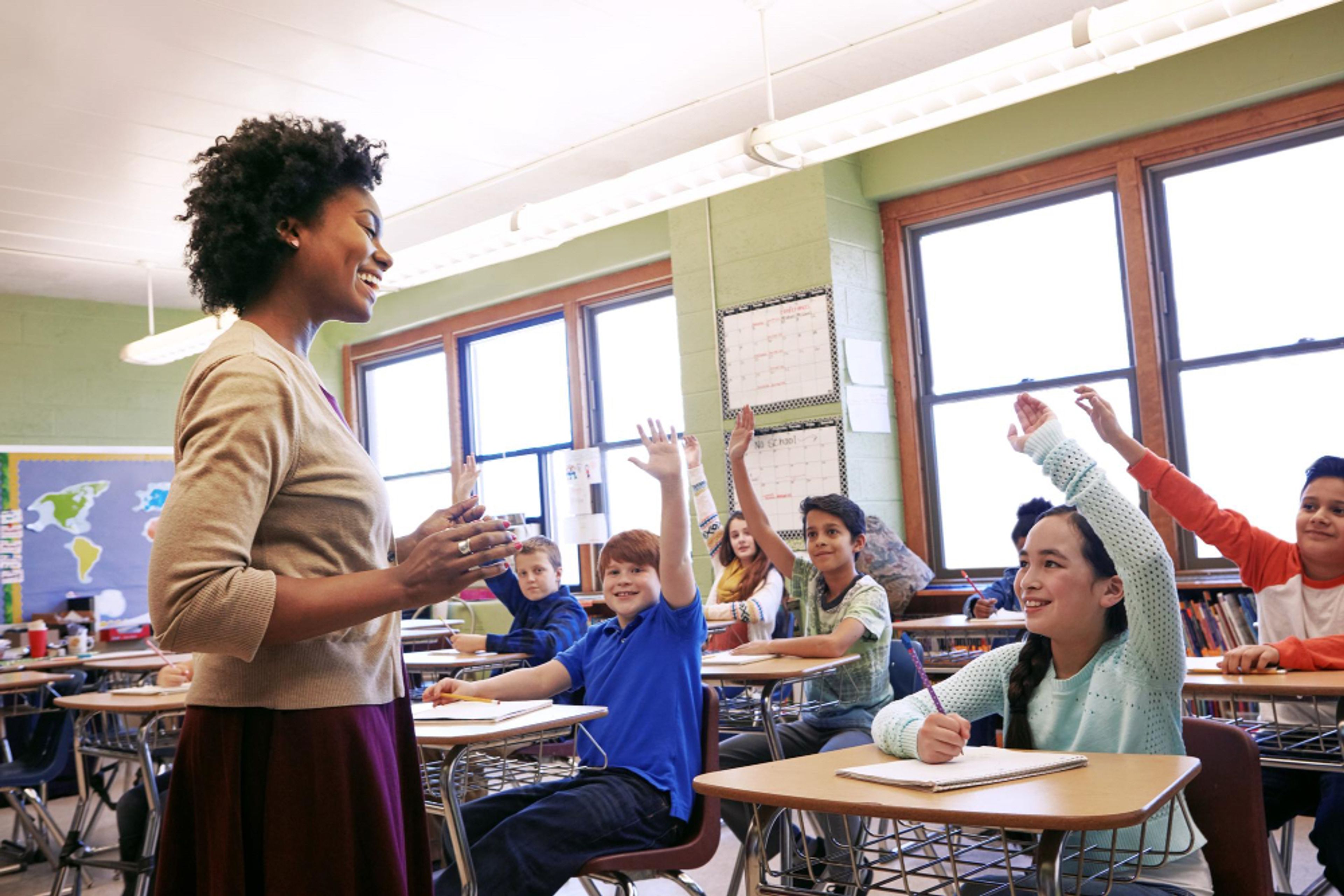
Take a section of 45 and a 50-minute period. If every student speaks for one minute, speaking has eaten the whole class and nobody has heard a single follow-up question. Give each student three minutes, which is closer to what a real explanation needs, and you are into a third period.
So participation concentrates. The same six or seven students answer, partly because they are quicker and partly because calling on them keeps the lesson moving. Everyone else stays in the audience. Over a term this compounds. The handful who speak keep building fluency, while everyone else loses ground on a skill that only develops through use.
This is an arithmetic problem before it is a pedagogy problem. No amount of lesson redesign creates class minutes that do not exist.
Writing gives students room to work. A student can draft, delete, look something up, ask a classmate, and hand in an answer that has already been through four revisions. What reaches your desk is the finished product of a process you never saw.
Speaking removes that buffer. To explain an idea out loud, a student has to hold the concept in mind, choose the words, order the steps, and keep going while someone waits. That pressure is exactly why speaking surfaces shaky understanding so quickly. A student who has memorised a procedure can usually reproduce it on paper. Asked why the procedure works, the same student often stops after the first sentence.
This is also why hearing a student reason in real time has become more informative over the last two years. When a written answer can be produced in seconds, the explanation behind it carries more of the evidence. It is the same logic behind AI formative assessment: the useful signal sits in the process, and the Stanford AI Education Summit landed on much the same conclusion about where assessment has to move.
Conversational assessment changes the constraint. Instead of one teacher working through 45 students in sequence, every student holds their own conversation at the same time.
In practice with better-ed, a teacher hands the system a lesson they already taught: upload the module, paste the text, or drop a link. Students then explain their answers out loud, in their own time. The system asks a follow-up when an explanation is thin, so a student who says "I subtracted 5" gets asked why that step comes first. Answers can come in English, Filipino, or the Taglish most students actually speak, which matters when the subject is science or maths and the language should not be the obstacle.
The teacher then reads the explanations themselves, along with where the class as a group came unstuck. Ten students who all missed the same step arrive as a pattern instead of ten separate marks in a record book.
better-ed surfaces what students said and where the reasoning broke down. What to reteach, who needs a second pass, and what a student's explanation is really worth all stay with the teacher. That is also how the teachers at Barcelona Academy have been using oral assessment in their own classrooms.
A large share of classroom silence has nothing to do with comprehension. Language educators have studied this for decades under the heading of foreign language classroom anxiety: fear of speaking badly in front of peers, of being corrected publicly, of the small social cost of getting it wrong out loud. Students carrying that fear stay quiet even on days they know the answer. Filipino teachers have documented the same pattern in their own strategies for drawing out comprehension and participation.
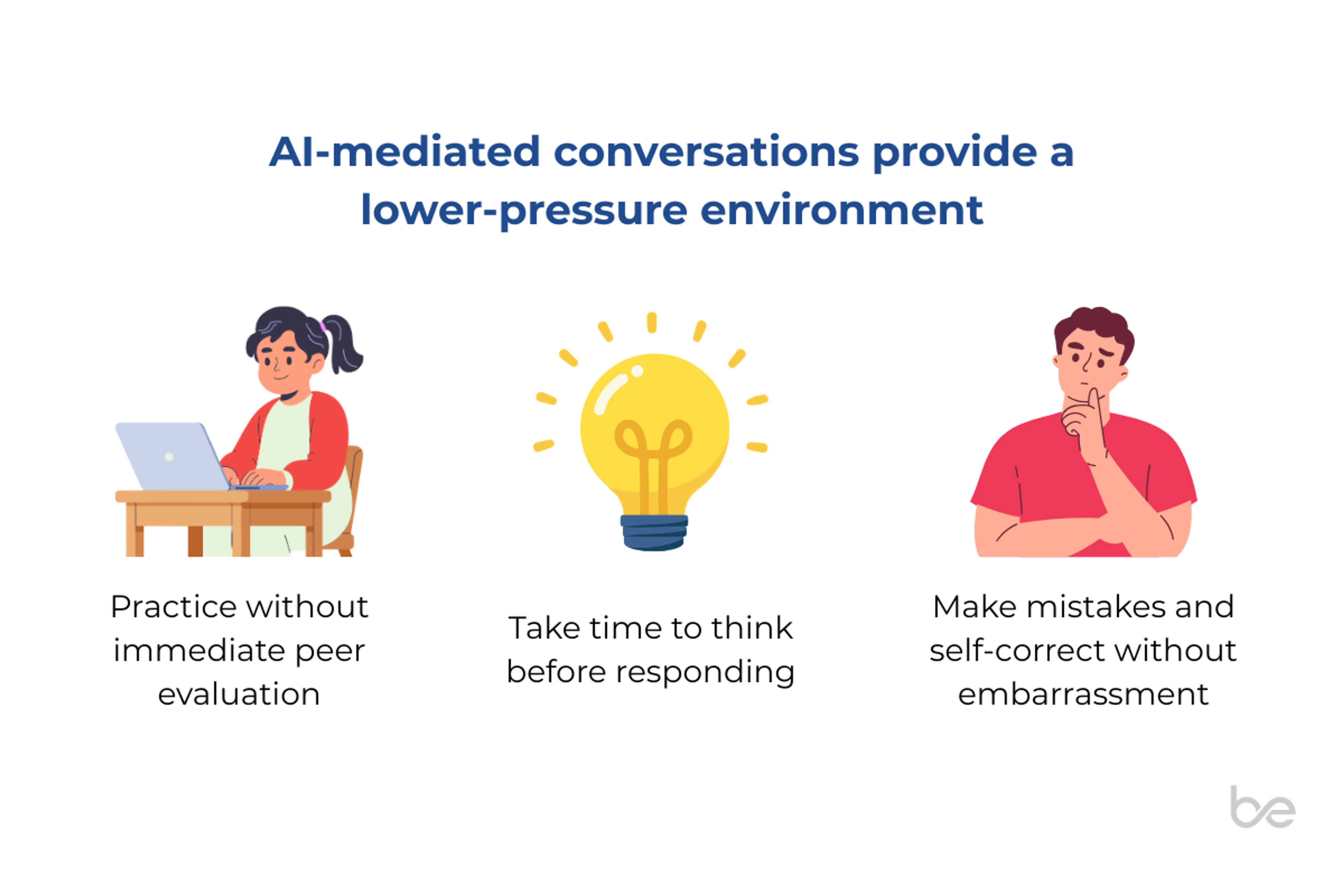
A one-to-one conversation removes the audience. No class watching, no reaction to brace for, no queue of classmates waiting on their turn. Students can restart a sentence, take a longer pause, or say the same idea twice while they hunt for better words.
Worth being honest about: private practice does not replace speaking in front of people, and it should not. It builds the floor. A student who has already explained an idea three times on their own walks into a graded recitation with something to stand on.
Speaking practice usually gets filed under language subjects, and that undersells it badly. Explaining is how understanding surfaces in every subject.
In pilot sessions, teachers have run conversational assessments on limits in calculus, Ohm's law in physics, layers of the atmosphere in earth science, and the reproductive system in biology. The useful moment is the same in each: the student says what they did, then says why, and the distance between the two becomes visible. The same principle sits underneath inquiry-based learning, where the reasoning is the point of the exercise.
The skills students build along the way travel further than the subject. Organising a thought under time pressure. Answering a question they did not see coming. Supporting a claim with a reason. Staying in a conversation when it gets harder. These turn up in interviews, defences, and every job that involves explaining your work to somebody else.
None of this asks teachers to add another activity to a full week. It changes where the time goes. Forty minutes of recitation that reaches eight students becomes a set of explanations that arrives already gathered, and the time gets spent deciding what to reteach.
It also changes what quiet means. Once every student has answered, silence in the room stops being the main evidence you have to work with. You have the explanations instead, including from the students who have never once volunteered.
Speaking develops through use. The classes that build it are the ones where speaking happens often, at low stakes, with something useful coming back every time.
—
better-ed is free for teachers. Bring a lesson you already teach, let your students explain it out loud, and see how they think. Sign up at better-ed.ai. 💙
