A correct quiz answer doesn't prove your students understood the lesson. Here's how checking for understanding through their reasoning reveals what really landed.

Jovi Maniago
Head of Marketing at Better-ed
You just finished teaching a lesson in Algebra. Most students nodded along, took notes, and seemed engaged. On the surface, it looks like the lesson was successful. But beneath that nodding, how many actually grasped the key concepts? Traditional signals like raised hands, class participation, or homework submissions can be misleading. Students may appear to understand, but without active probing, misconceptions remain hidden. This is what checking for understanding is really about—not confirming who produced the right answer, but seeing who actually grasped why.
This gap between perceived and actual understanding is a persistent challenge for educators. Relying solely on written work or end-of-unit exams delays feedback and can leave misconceptions uncorrected for weeks. By the time they surface, the class may have moved on to more complex topics, compounding learning gaps.
Imagine a Grade 9 class after a unit on linear relationships. You ask:
“What is the slope of the line?”
Five students raise their hands; three get the answer right.
Does that mean everyone understands?
Not necessarily.
In traditional assessments — multiple choice, quick quizzes, exit tickets — teachers often capture surface correctness. But understanding isn’t just about correct products; it’s about the process of thinking. A student might guess the right slope without understanding what it represents or how it was derived.
Even more so today, where students can use AI or prior memorized steps, correct answers become less reliable as evidence of comprehension.
This has real consequences: misplaced confidence can lead teachers to skip crucial reteaching, and students carry forward shaky foundations into more complex topics.
A stronger formative assessment looks like a conversation.
Instead of asking only what, it asks:
When students are prompted to explain their reasoning, teachers can see whether they:
This shift from correctness to reasoning aligns with real learning — students who can articulate “why” are more likely to retain concepts and transfer them to new problems.
In practice, this means giving students prompts that require explanation, not just selection. A lesson wrap‑up might include questions like:
“Explain how you knew which variable to isolate first.”
“In your own words, describe what the graph tells you about the relationship between x and y.”
These prompts aren’t merely tougher; they reveal how students think.
Take a Grade 9 algebra class that just explored solving linear equations.
Traditionally, the teacher might close the lesson with a worksheet or a short quiz, then skim answers later. But imagine a richer scenario:
Suddenly, the morning is not lost. Misconceptions are visible while the lesson is still recent.
Teachers can then tailor their next class: revisiting equivalence concepts, offering examples, and using targeted practice to reinforce understanding.
This approach does not add work, but it redistributes the value of time toward insight.
Here are actionable strategies teachers can use:
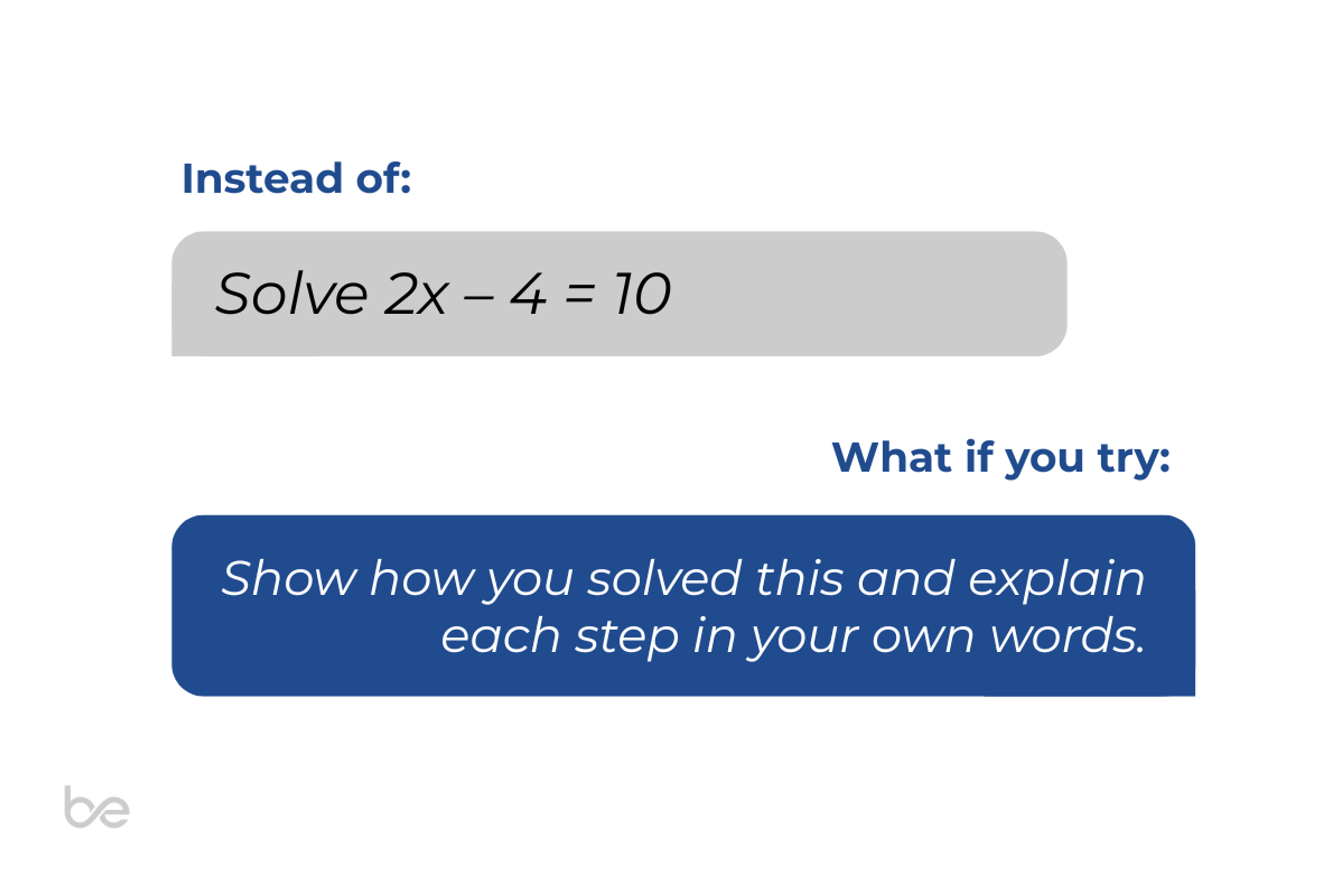
This encourages metacognitive thinking — students reflect on how they think, not just what they did.
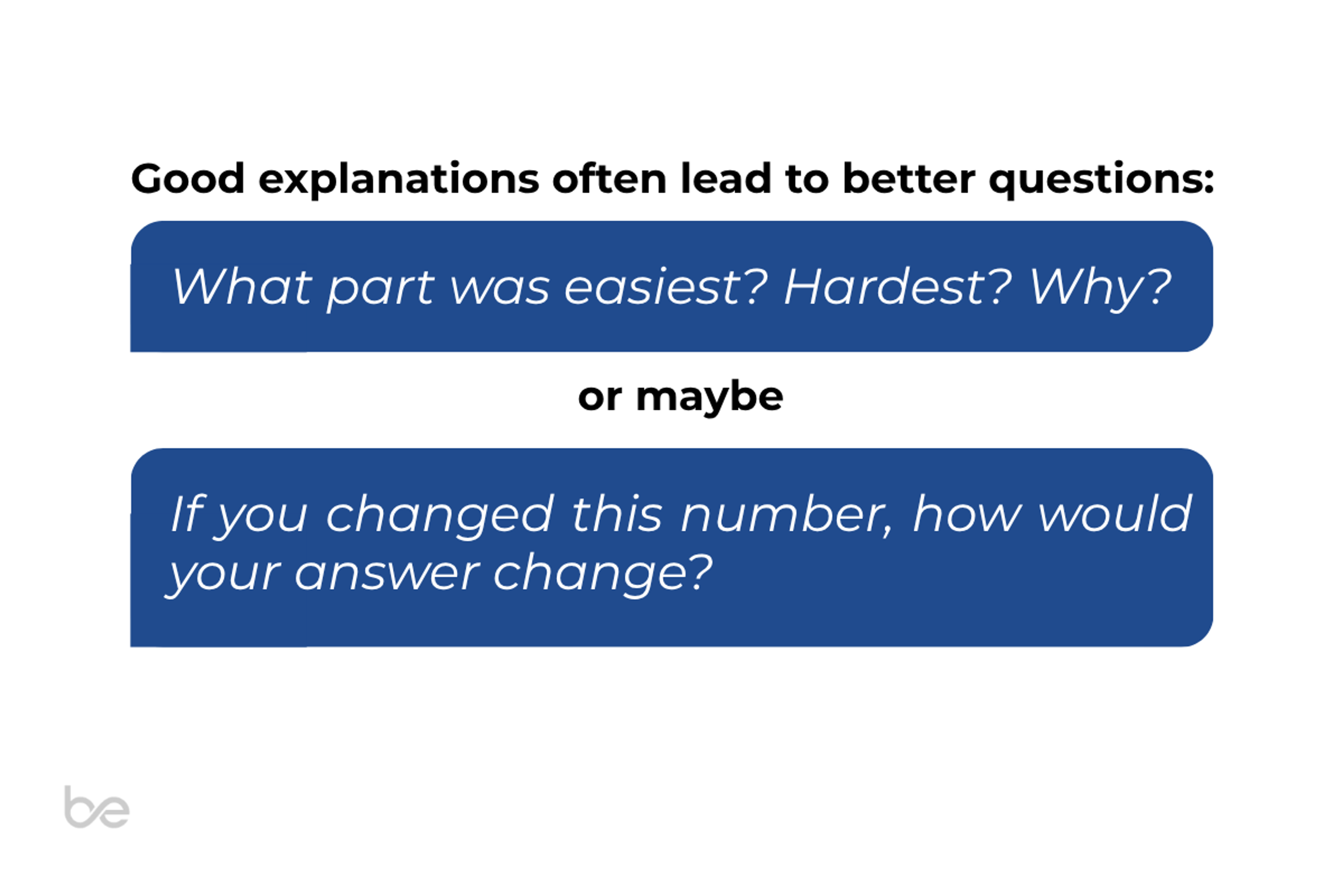
Follow‑up prompts deepen engagement.
Formative assessment isn’t just for identifying who’s “ahead” or “behind.” It’s also a tool for equity.
When every student explains their thinking, not just the confident ones, teachers uncover a range of perspectives and learning paths. Students who may be quiet in class get a space to articulate ideas. Struggling learners reveal specific misconceptions that can be addressed before they cascade.
This is especially meaningful in diverse classrooms where learners come with varying strengths and gaps.
Real formative assessment is not an add‑on. It is integral to understanding how students think. When assessment captures reasoning rather than correctness, teachers make better decisions, students engage more deeply, and learning becomes visible.
As classrooms evolve with technology, the value of insight into student thinking grows. Formative assessments that emphasize explanation create a learning culture where understanding is not assumed, it is demonstrated.
———
Want to see how your students actually think, not just whether they got the answer right? With better-ed, you give a lesson, students explain their reasoning in a short conversation, and you see exactly where understanding is solid and where it needs another pass. It's free for teachers to try at better-ed.ai.
Related reading from the better-ed blog
