Discover evidence-based oral assessment frameworks that improve learning outcomes, boost reliability, and enhance inclusivity—plus how better-ed brings them to life in the classroom.

Jovi Maniago
Head of Marketing at Better-ed

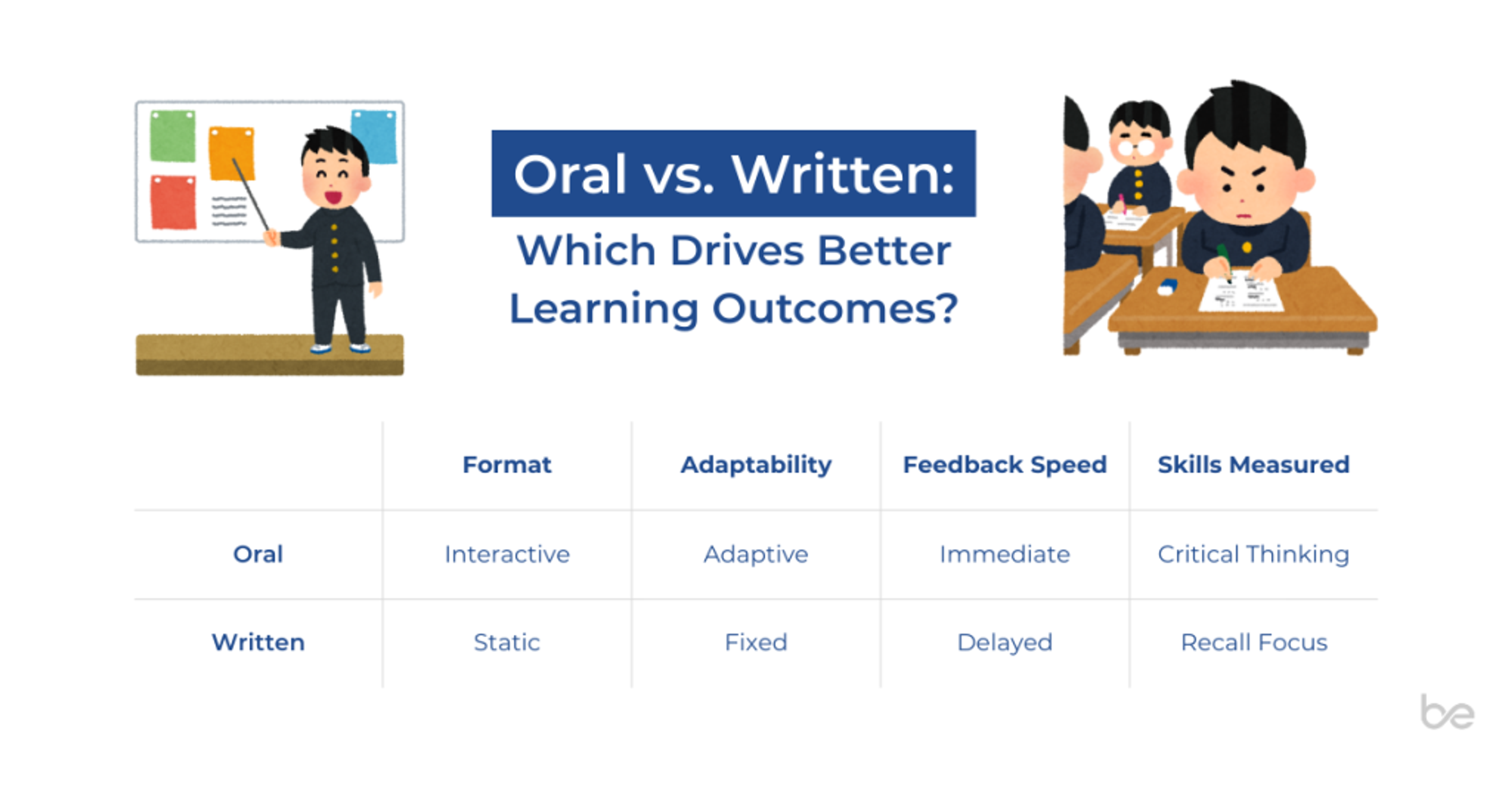
Oral examinations and in-class recitations have emerged as powerful pedagogical tools, often outperforming traditional written assessments in evaluating both academic mastery and real-world competencies. Research indicates that oral assessment formats yield significant learning gains, with students demonstrating improved performance and deeper retention compared to written alternatives (Lyster & Saito, 2010; Hattie, 2009).
Meta-analyses also show that oral feedback can achieve effect sizes approaching 0.87 in certain contexts—particularly language learning—substantially higher than peer feedback (0.58) and computer-based feedback (0.38) (Lyster & Saito, 2010; Hattie, 2009). This advantage comes from the unique ability of oral assessments to support real-time interaction, immediate clarification, and adaptive questioning that responds to the student’s thought process.
The COVID-19 pandemic further accelerated this shift, with virtual oral assessment implementations—such as Qpercom’s bespoke platform for remote OSCEs—reporting 84% cost reductions while maintaining assessment validity (Qpercom, 2021).
Contemporary frameworks now combine constructivist learning theory, AI-powered platforms, and inclusive design principles to create assessment methods that simultaneously measure and enhance student learning. The following sections explore the evidence-based approaches educators can use across disciplines—many of which inform how better-ed is designed for maximum impact.
Three theoretical frameworks underpin the success of oral assessment:
Frames oral assessment as active knowledge construction, where students articulate understanding and engage in meaning-making through dialogue with an examiner (Vygotsky, 1978).
Suggests oral exams naturally operate in an optimal learning space where scaffolding supports students just beyond their independent capability.
Indicates that oral formats—when well designed—can reduce extraneous load by eliminating complex text-processing demands, freeing mental resources for higher-order reasoning (Sweller, 2011).
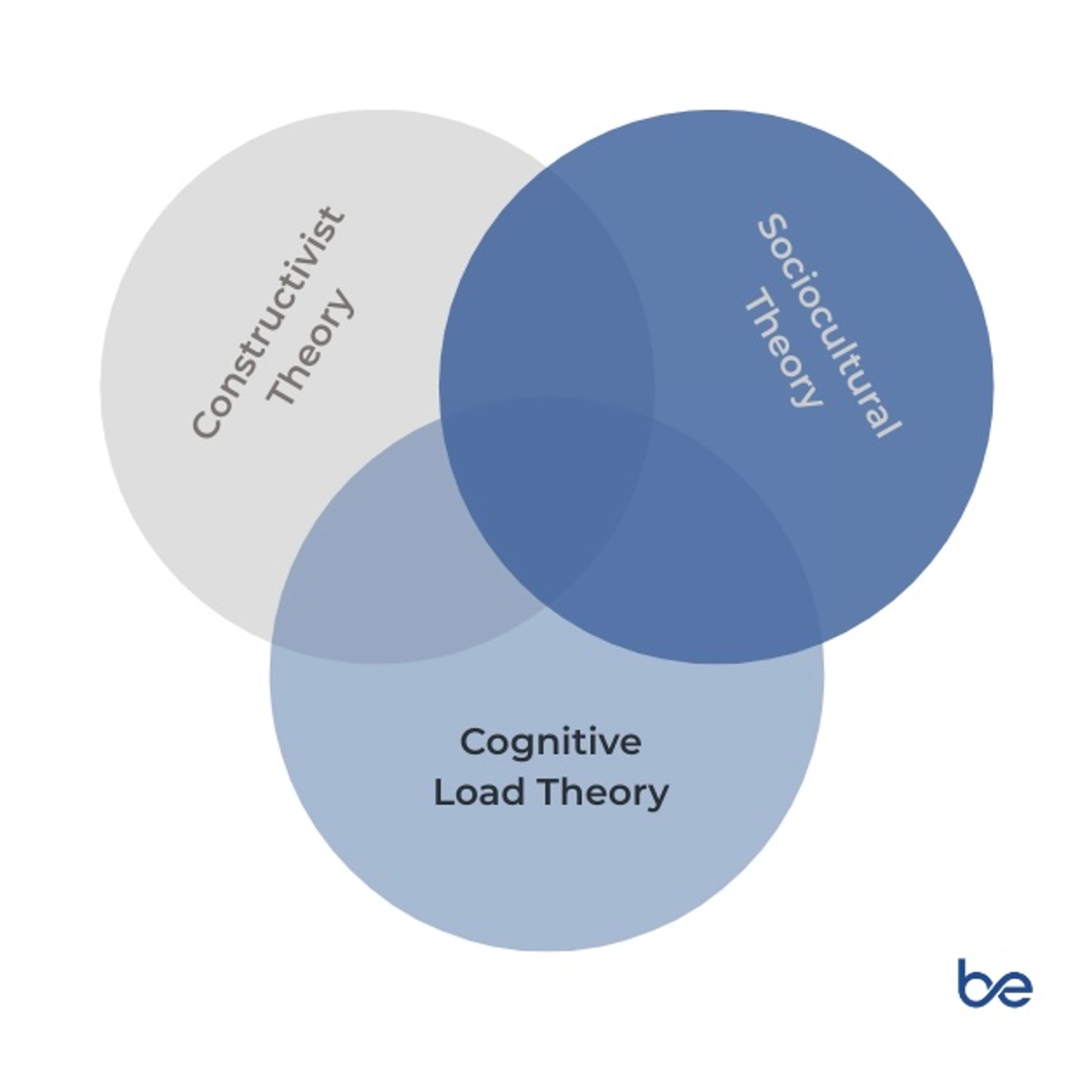
These foundations converge in authentic assessment frameworks like the Six-Dimensional Framework, which examines content type, interaction patterns, authenticity, structure, examiner roles, and oral language considerations.
Subjectivity in oral exams can be mitigated through structured approaches:
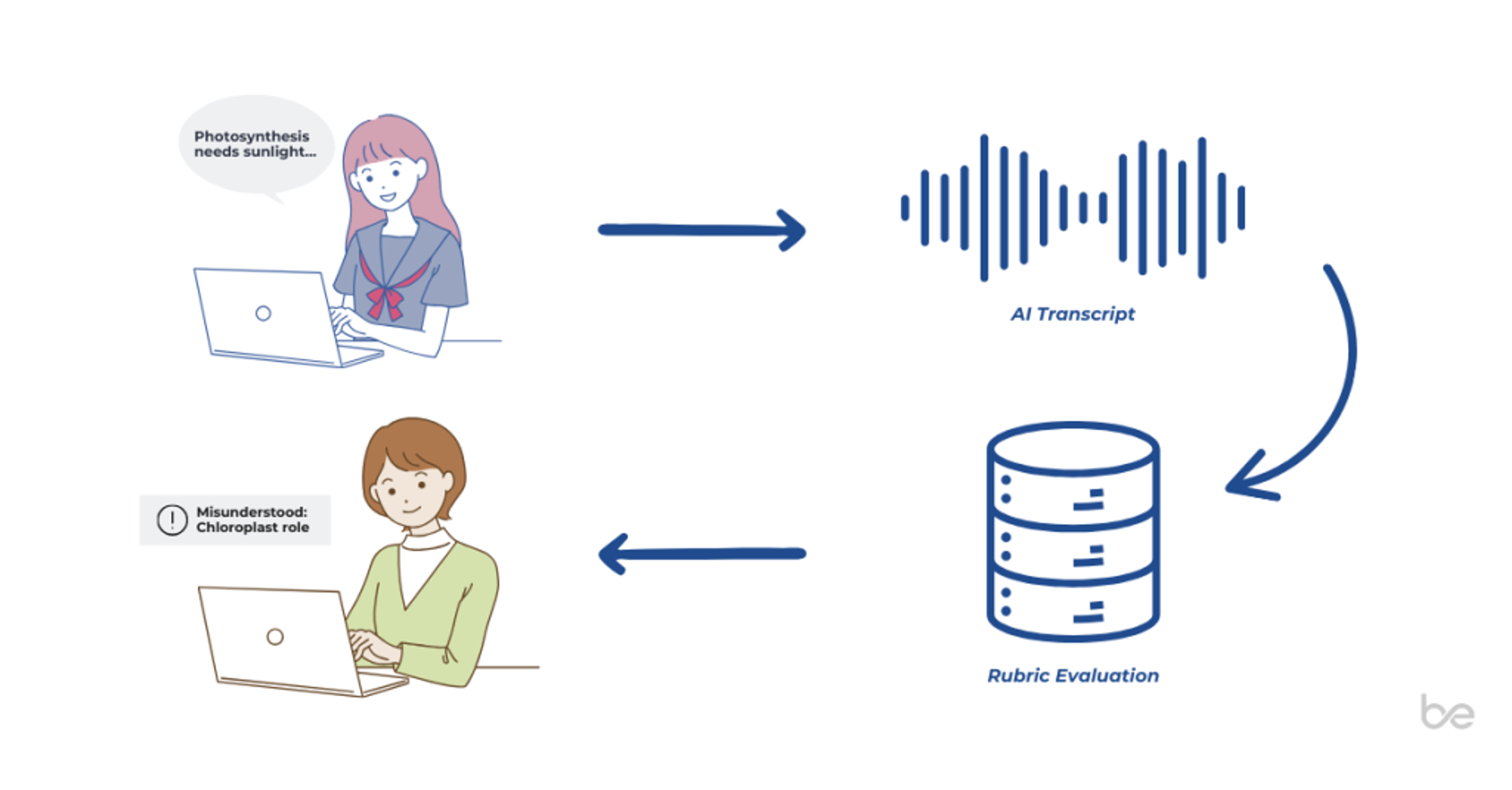
better-ed integrates these reliability principles by supporting rubric-driven evaluation with AI-assisted transcript analysis—reducing variance while retaining the benefits of live conversation.
Different formats serve different learning objectives:
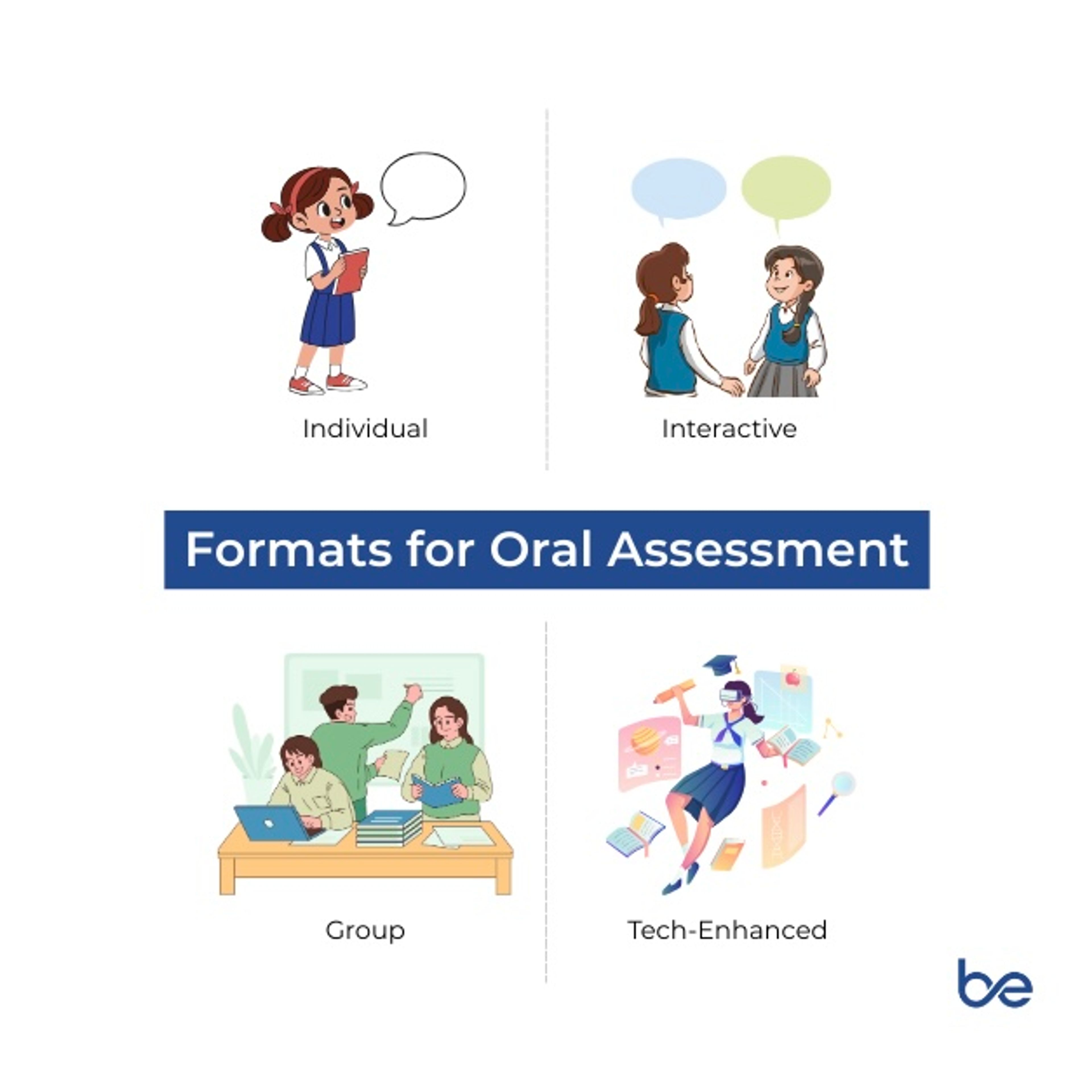
better-ed enables educators to select the most effective format for their goals, from one-on-one dialogues to collaborative oral problem-solving.
Oral assessment anxiety is a known challenge. However, it can be mitigated with:
Inclusivity considerations:
better-ed supports inclusivity with voice input that focuses on conceptual understanding, adjustable pacing, and multilingual AI feedback.
AI-powered oral assessment tools enable scalable, authentic questioning while preserving integrity. Platforms like Qpercom Observe demonstrate significant efficiency gains: 70% reduction in administration time and 84% cost savings(Qpercom, 2021).
VR and AI integration can extend benefits beyond scale—offering immersive, low-risk environments for practicing professional discourse (Yang et al., 2021). better-ed leverages AI for real-time analysis and VR-readiness for future-proofing its assessment delivery.
Integration withBloom’s Taxonomy ensures higher-order skills are targeted. Authentic assessments increase motivation and engagement, especially when mirroring workplace communication (Wiggins, 1998).
Formative assessment integration—where assessment doubles as learning—improves metacognition and skill transfer (Black & Wiliam, 1998).
better-ed’s adaptive questioning ensures assessments align with both curriculum goals and real-world competencies.
Fairness requires:
better-ed’s analytics track reliability metrics and support iterative improvement.
better-ed’s voice-enabled AI assessment platform was built to embody the best practices outlined above. By combining:
better-ed empowers educators to assess not just what students know, but how they think—at scale, with fairness, and in a way that supports ongoing learning.
Our pilot programs have shown that when students explain their reasoning in their own voice, teachers gain insights that written assessments simply can’t capture—leading to better feedback, higher retention, and more confident learners.
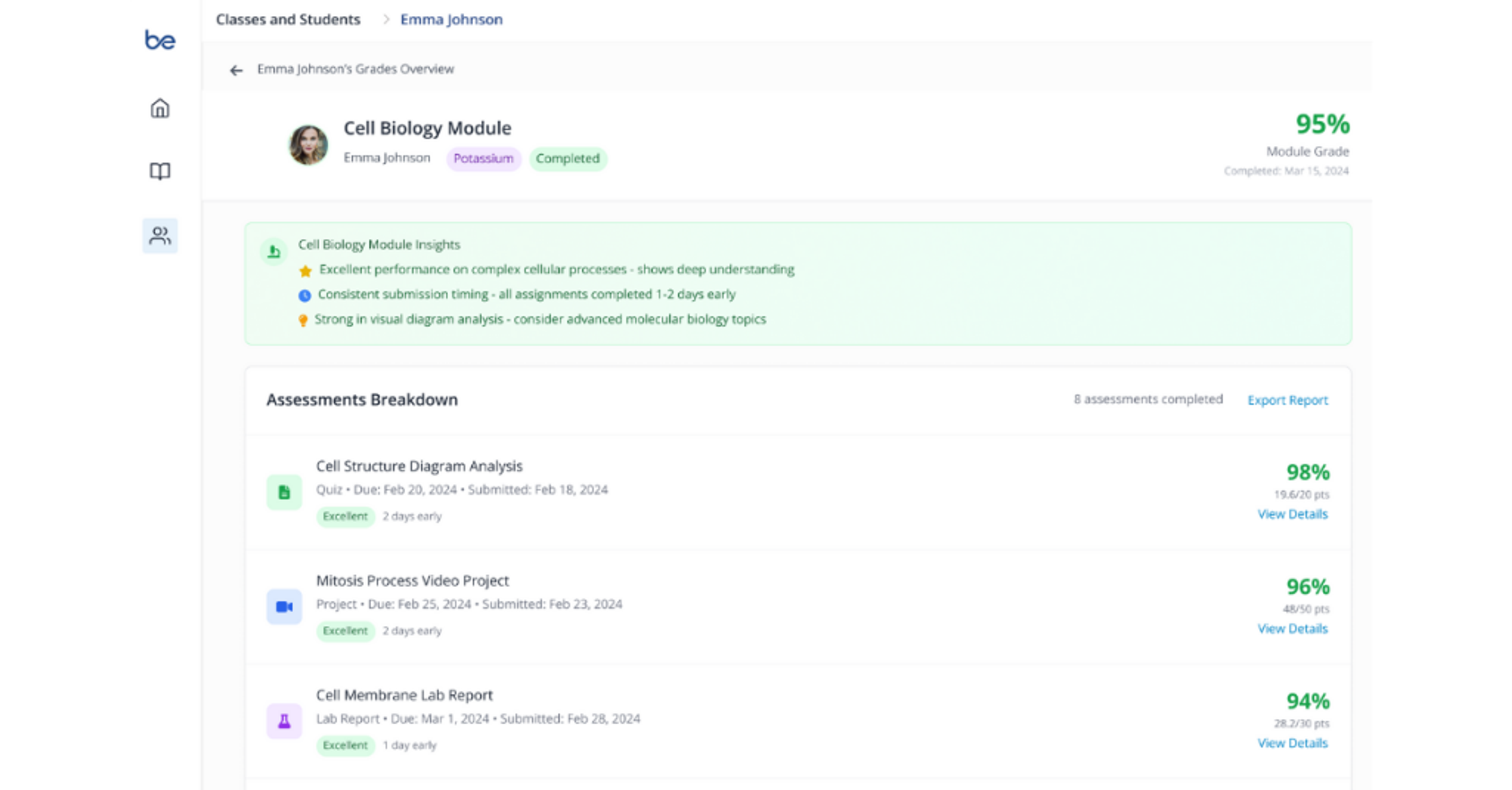
Ready to see evidence-based oral assessment in action?
With better-ed, educators can create authentic, reliable, and inclusive assessments that go beyond the written test—empowering students to think, speak, and learn with confidence.
Book a demo or start your pilot program today and experience how voice-driven AI can transform assessment in your classroom.
better-ed is a product of Predictive Systems Inc. (PSI), a leader in secure, ethical, and high-performing AI solutions for education, legal, and enterprise sectors. Explore more services.
